Zero authority. Dev team blocking crawlers. Still built a lead machine.
The situation
A Nigerian fintech company building a lending marketplace came in with every disadvantage you can have in organic search: a brand new domain with zero authority, no existing traffic, no content, and a development team that had inadvertently configured the site to block Google’s crawlers during the build phase.
They were also operating in a high-intent, competitive space. Terms like “loan app Nigeria,” “USSD loan code,” and “OPay loan” were being searched thousands of times per month by people who needed money quickly. Ranking for these terms would deliver leads directly. buyers at the bottom of the funnel, ready to apply.
The challenge was building from nothing in a market where competitors had years of authority, while simultaneously fixing a crawling problem that meant Google didn’t even know the site existed yet.
What made this harder than a typical new site
- Crawlers blocked. The development team had added robots.txt rules during the build that were still live in production. Google had not indexed the site properly. Before any SEO work could produce results, this had to be resolved, which required navigating a conversation with a dev team that didn’t initially see it as their problem.
- Brand new domain. No historical trust. No existing backlinks. Google treats new domains with far more scepticism than established ones, especially in financial categories where YMYL signals matter.
- High competition for revenue keywords. The most valuable search terms. loan apps, USSD codes, quick loans Nigeria. had established financial institutions and apps competing for them with years of domain age and authority.
The approach
Step 1: Fix the crawling problem. Before anything else, I worked with the dev team to identify and resolve the robots.txt issues. Submitted a clean XML sitemap. Verified through Google Search Console that Googlebot could now access the site properly. This took time because it required getting the dev team to understand the SEO implications of their configuration. a communication problem as much as a technical one.
Step 2: Content strategy built around high-intent search queries. I mapped the full landscape of how Nigerians search for lending products: specific app names, USSD codes, loan eligibility questions, comparison queries, how-to searches. The content strategy targeted each cluster systematically. starting with the queries that had reasonable competition levels and working toward the higher-competition terms as domain authority accumulated.
Step 3: Authority building on a new domain. New domains need external signals to tell Google they are legitimate. I built a backlink strategy targeting Nigerian finance publications, news outlets, and relevant web directories. The focus was on signals that also drove real referral traffic. not link farms, but placements that a user would genuinely click from.
Step 4: Technical SEO for a fintech product. Structured data for financial products. Site architecture that put the highest-intent landing pages closest to the root domain. Internal linking that connected informational content (how-to articles, explainers) to the high-intent product pages where applications happened.
The results
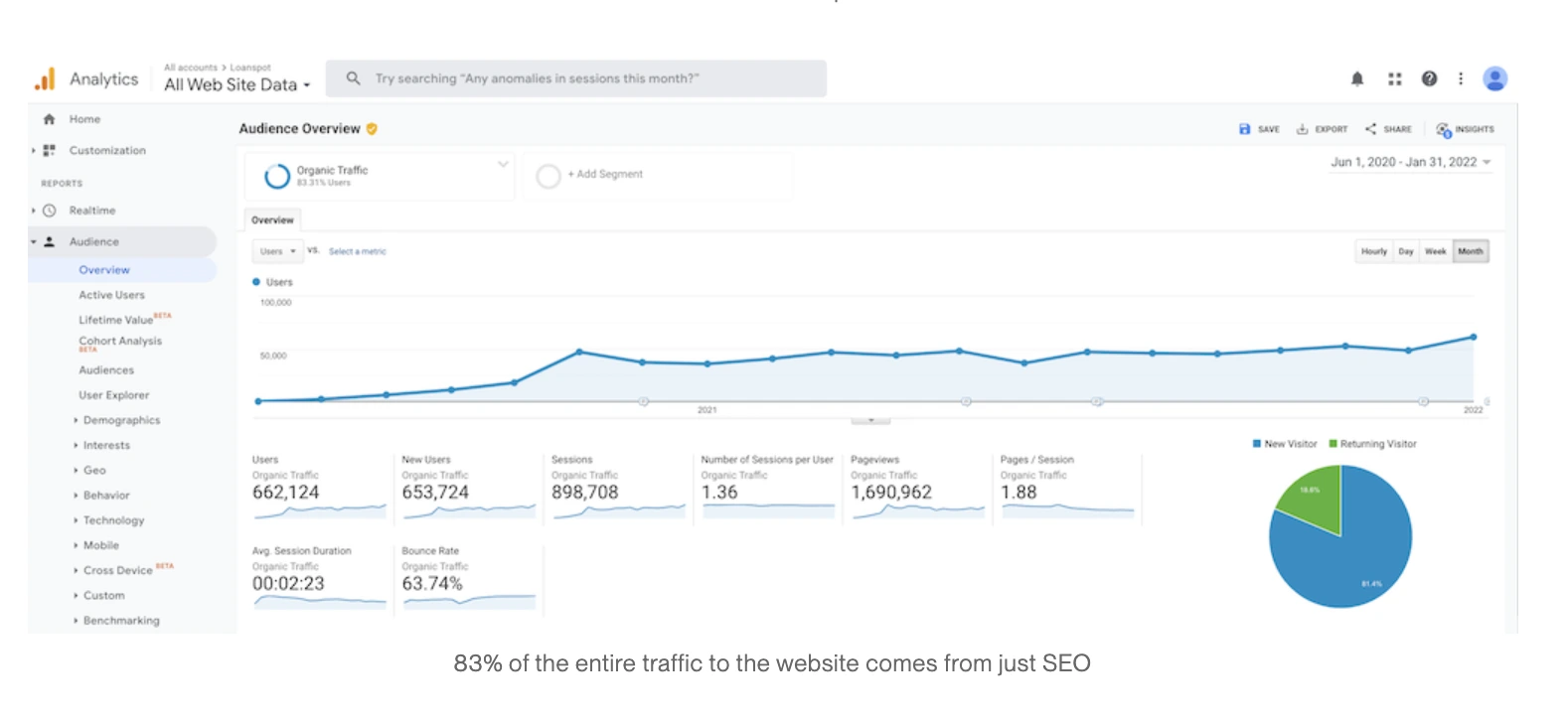
Within 8 months, the site was receiving 2,600+ daily organic visitors. Between 40 and 60 inbound leads per day were coming through organic search alone. people searching for loan products, finding the marketplace, and submitting applications.
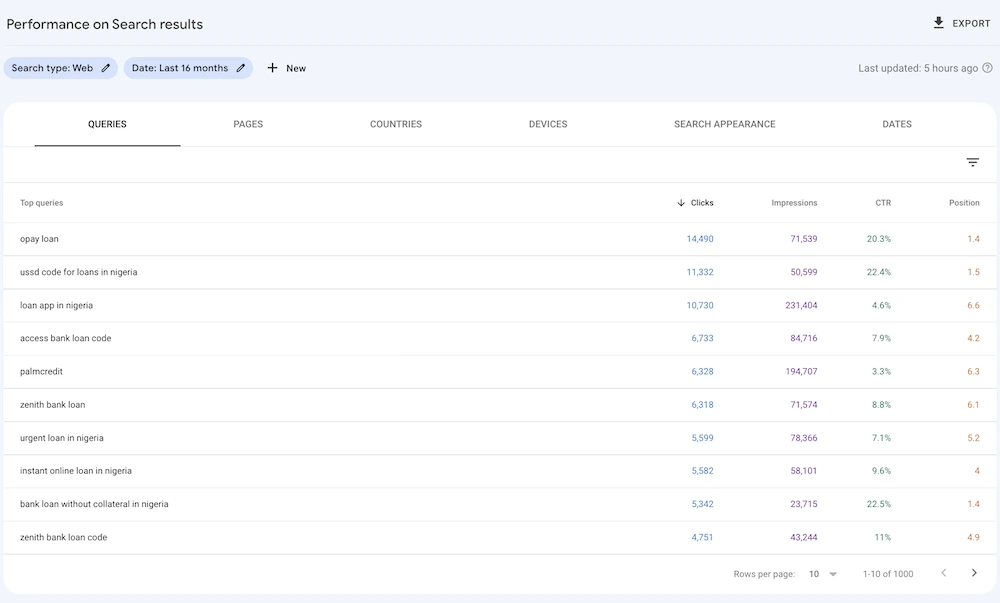
The terms ranking included exactly the high-intent queries we had targeted: loan apps in Nigeria, USSD codes, OPay loan-related terms. These were not informational readers. They were people at the bottom of the decision journey, actively looking for a product.
The key lesson
The technical problem. crawlers blocked. could have been an excuse to wait. In SEO, delays are expensive because organic growth compounds over time. Every month of delay is a month of authority and rankings you cannot get back.
The most important decision was to escalate the crawling issue immediately rather than work around it, and to begin content and authority-building work in parallel while the technical fix was being implemented. By the time Google had full access to the site, there was already content ready to rank and link signals beginning to accumulate. That parallel execution shaved months off the timeline to results.
It is also worth noting: this was a Nigerian fintech in a high-intent local market. The search demand was real and large. Building an organic channel to capture it cost a fraction of what paid acquisition for the same 2,600 daily visitors would have required. And the organic channel compounds. The paid channel stops the moment the budget stops.

More case studies
Zero organic leads doesn’t have to be permanent.
30 minutes. No pitch. You leave knowing what’s actually blocking your organic growth and what I’d do first.