500+ thin product pages.
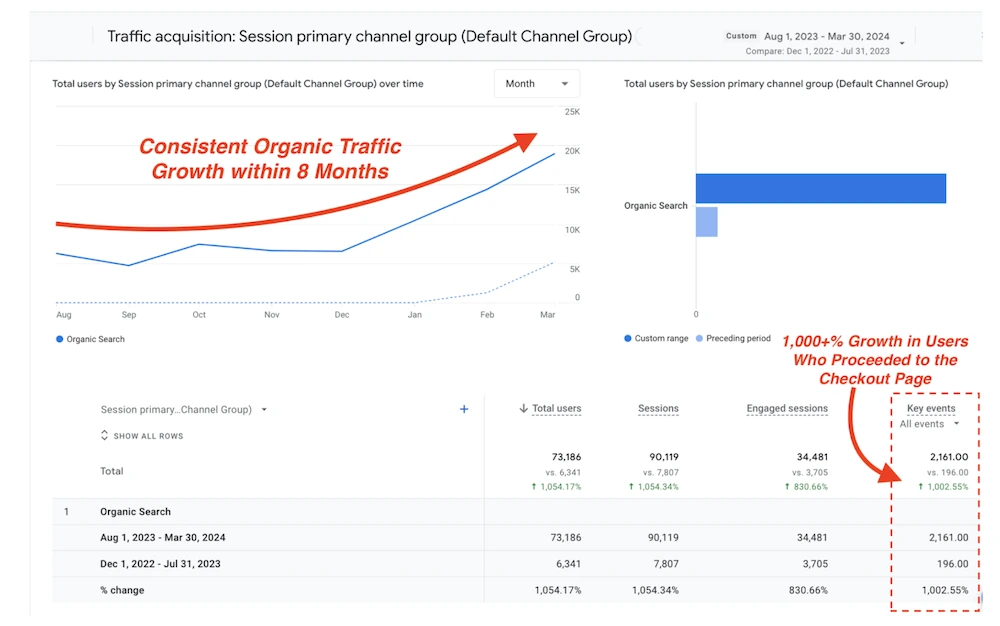
8 months later: 1,002% more
users reaching checkout.
A Samsung e-commerce partner with disorganised product listings, a traffic problem, and a conversion problem. We fixed both at the same time. The results compounded across 8 months.
Two problems. One system.
This Samsung e-commerce partner had a site with over 500 product pages. The traffic was low. The conversion rate was lower. Leadership was running paid ads to compensate for both. And paying for that approach at scale was not sustainable.
The brief was simple: fix organic. What the audit revealed was that organic and conversion were failing for the same underlying reason. The product pages were not built to satisfy the intent of the people landing on them. Users who came from search couldn’t find what they were looking for fast enough and left. Google saw that happening at scale and ranked the pages accordingly.
What the audit found.
Product pages were thin. Most had a product name, a price, and a few lines of copied manufacturer description. No differentiation. No content that answered buyer questions. No internal linking connecting related products. No structured approach to which keywords each page was targeting.
- 500+ product pages with thin, duplicate, or manufacturer-copied content
- No keyword strategy. pages competing with each other for the same terms
- Category architecture not mapped to how buyers actually search
- Checkout funnel with friction points that were entirely fixable
- Mobile experience not optimised for user satisfaction
- No structured data for product rich results
The SEO and CRO approach.
We ran SEO and CRO as a single system rather than sequential projects. The logic was simple: if we fix organic traffic first, we send more people through a broken checkout process. If we fix CRO first, we improve the conversion rate on a traffic base that isn’t growing. Building both simultaneously means the improvements compound each other.
Product pages were rebuilt with intent-matched content. answering the real questions buyers have at the moment of searching for a specific product. Buying guides and category pages were created to capture top-of-funnel intent and route it toward product pages. Structured data was implemented across the site.
The checkout funnel was analysed using behaviour data. Drop-off points identified. Friction removed. Form fields reduced. Progress indication added. Trust signals placed at the exact moments where users were abandoning.
Eight months of compound results.
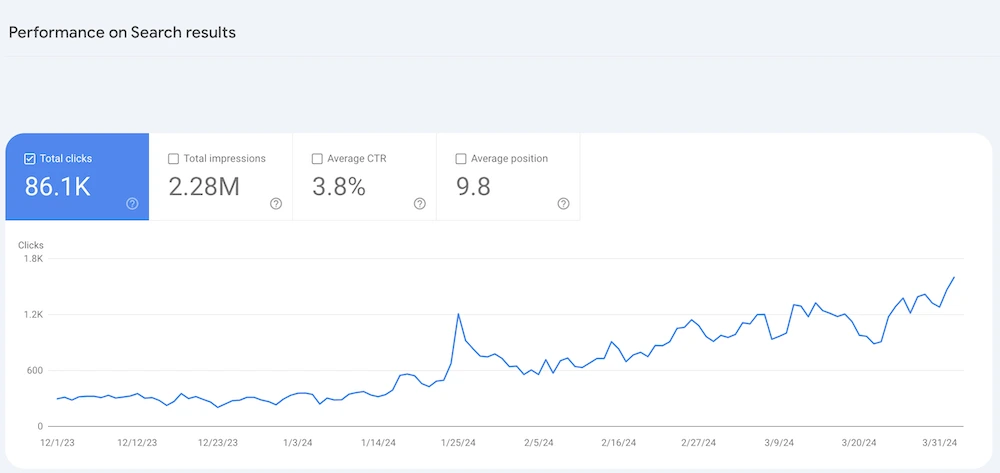
The Google Search Console data tells the organic story: 1,054% growth in organic traffic over the engagement period. Steady, compounding growth. Not a spike. The kind that continues after the engagement ends.
The GA4 checkout data tells the conversion story: 1,002.55% more users reaching the checkout page. 830.66% growth in engaged sessions. This means the right kind of traffic, staying longer and going deeper into the funnel.
The key insight: SEO and CRO failing simultaneously almost always means the site is not satisfying user intent. The fix for both is the same thing: understand exactly what your buyer is looking for and give them that, completely, at each stage of the journey.
Eight months. Documented.