The site had traffic.
It didn’t have buyers.
A B2B SaaS business phone system generating thousands of organic visits from informational content. Almost none of it converted. I diagnosed the intent gap, built commercial landing pages, and the signup-to-customer rate went from 6.25% to 34% in four months.
The problem was intent, not volume.
When I joined, the organic channel was already generating traffic. The content strategy was heavily informational: articles targeting generic queries like area codes, business ideas, and general telecom topics. These drove impressions and leads, but not buyers.
The conversion funnel reflected this. Organic leads were signing up at a reasonable rate (70-75% lead-to-signup), but the signup-to-customer rate sat at 6.25%. That means 94 out of 100 people who signed up left without paying. The site had a content library built for researchers, and nothing built for purchasers.
The diagnosis.
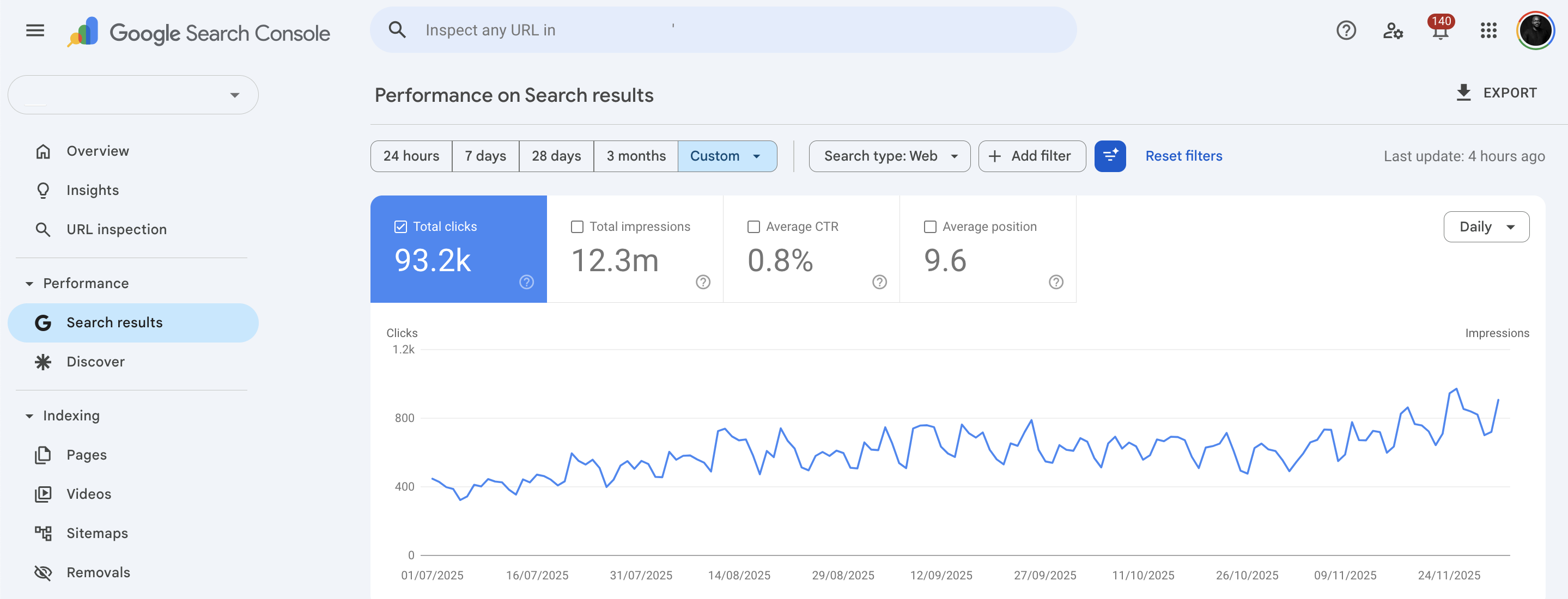
Using Google Search Console and conversion data from Metabase, I identified that the highest-traffic pages were ranking for informational keywords with near-zero commercial intent. The gap was structural: the site had content for people researching telecom topics, but nothing purpose-built for people actively looking for a business phone system.
- Top-performing pages were informational articles with no path to purchase
- No landing pages targeting transactional or commercial-investigation queries
- Funnel bottleneck was not sign-up friction (70-81% lead-to-signup) but purchase intent quality
- The 6.25% signup-to-customer rate confirmed: people arriving were not in buying mode
The intervention.
I built new commercial-intent landing pages targeting buyers at the bottom of the funnel. People searching for specific solutions, not general information. The pages were designed around three principles:
- Keyword targeting: transactional and commercial-investigation queries tied to business phone systems, VoIP, and call management for SMBs
- Conversion architecture: each page built around a single primary CTA, with benefit-led copy, social proof, and friction-reducing elements
- Funnel alignment: pages mapped directly to the sign-up flow so the journey from search to trial was as short as possible
August: the inflection point.
The data confirms the August 2025 launch window. Signup-to-customer rate jumped from 5.94% in July to 21.59% in August. A 3.6x single-month improvement. It then continued climbing to a peak of 34.02% in October as the pages accumulated organic authority.
This is the expected trajectory of a well-executed commercial SEO strategy: slow build, then compounding returns. The landing pages did not just add a new traffic source. They changed the composition of the entire organic funnel, pulling in people who were already looking to buy.
Why this compounds.
The organic click trend shows daily clicks scaling from approximately 400 in July to regularly exceeding 800 by November. 93,200 total clicks and 12.3 million impressions across the period. This reflects both the compounding effect of new landing pages gaining authority and broader organic growth.
November hit 509 organic leads, the highest month in the engagement. Even in December, with typical seasonal softening, the channel sustained 389 leads at an 18.21% signup-to-customer rate. The system keeps producing after the work is done.
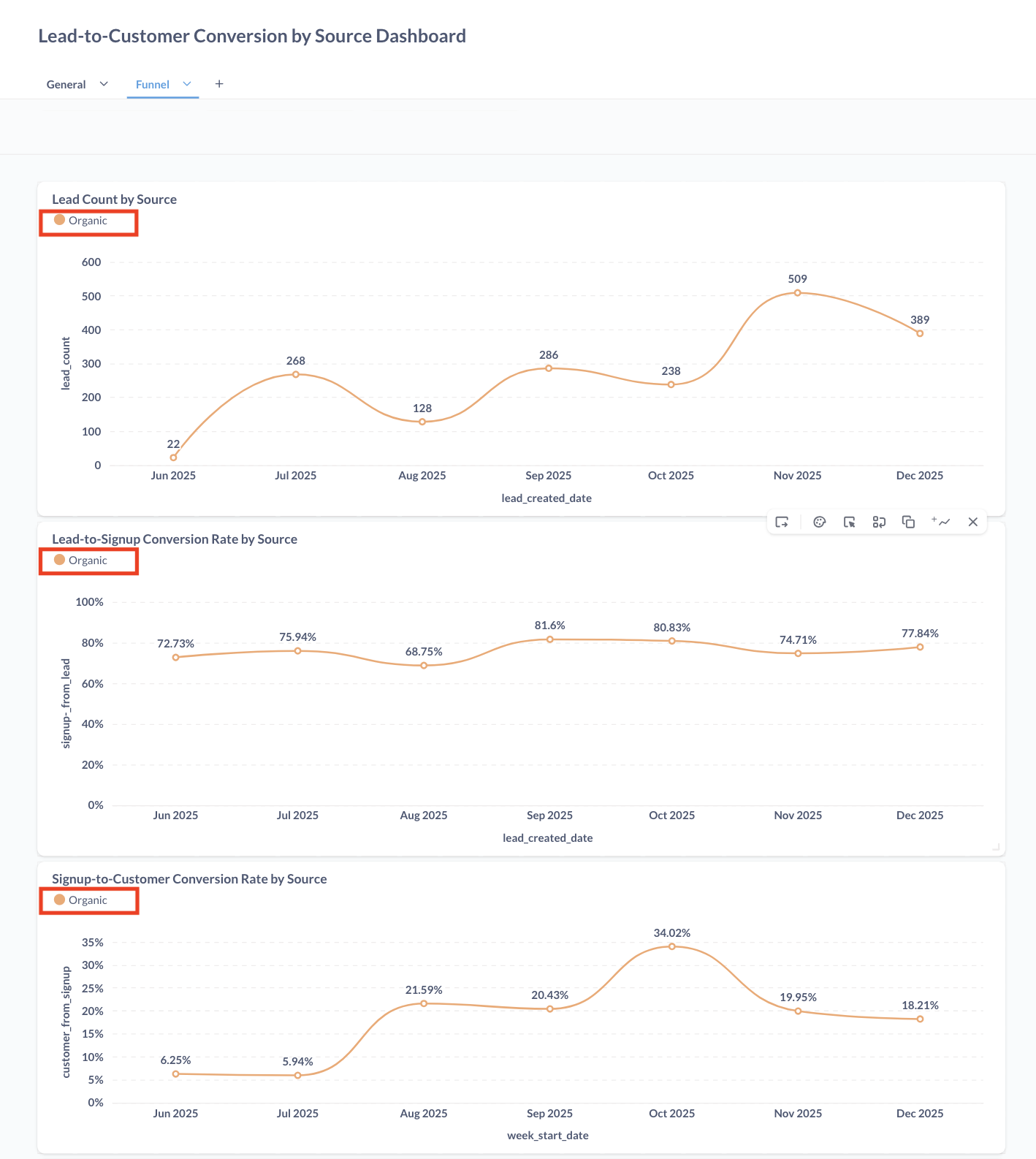
The full organic funnel, Jun to Dec 2025.
| Month | Organic Leads | Lead → Signup | Signup → Customer | Signal |
|---|---|---|---|---|
| Jun 2025 | 22 | 72.73% | 6.25% | Baseline. Informational content only |
| Jul 2025 | 268 | 75.94% | 5.94% | Pre-launch. Lead volume growing |
| Aug 2025 | 128 | 68.75% | 21.59% | Landing pages launched. Conversion jumps 3.6x |
| Sep 2025 | 286 | 81.60% | 20.43% | Consolidation. Rankings building |
| Oct 2025 | 238 | 80.83% | 34.02% | Peak conversion. Pages gaining authority |
| Nov 2025 | 509 | 74.71% | 19.95% | Peak lead volume. Highest organic month |
| Dec 2025 | 389 | 77.84% | 18.21% | Sustained performance post-peak |
From informational traffic to revenue.